How To Write A Notice: A Complete Beginner’s Guide
25/08/2025
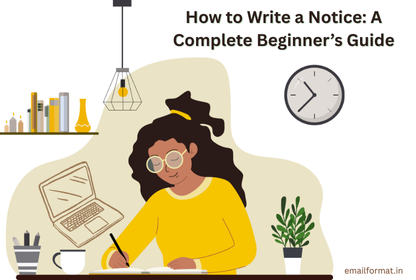
A notice is a formal piece of writing used to share important information within an organization, school, or workplace. Whether you are a student writing a notice for a school event or an employee submitting a resignation, notices follow a specific structure. They must be clear, concise, and easy to understand. Learning how to write a notice correctly is a skill that helps you communicate effectively in both professional and personal settings. In this guide, we will walk you through everything you need to know as a beginner.
The primary purpose of a notice is to provide official information to a group of people in a straightforward way. For example, a school may issue a notice about upcoming holidays, or an employee might write a notice to inform their employer about resignation. Unlike personal letters, notices are always short and to the point. They serve as formal announcements that everyone can easily read and understand. By learning the purpose, you will also understand how notices are different from informal communication like messages or casual emails.
A well-written notice always contains certain essential parts. These include the title "NOTICE" at the top, the date of issuing, the name of the issuing authority, the subject line, the body text, and the signature or designation of the writer. Each component plays a vital role in making the notice official and understandable. Leaving out any of these parts can make the notice incomplete. As a beginner, it is important to get familiar with these key elements because they form the backbone of any professional notice writing format.
The tone of a notice should always be formal and polite, no matter what the context is. Even if you are resigning from a job or canceling an event, the language should remain respectful. Avoid using casual phrases, slang, or unnecessary details. For instance, instead of saying “I quit,” you should write “I am submitting my resignation with effect from…”. A polite and professional tone ensures that your message is received positively and keeps your relationship with the audience professional and respectful.
The structure of a notice is simple yet formal. Start by writing “NOTICE” at the top center of the page. Next, add the date and subject line. The subject line should clearly explain the purpose of the notice. After that, write the main content in short, direct sentences. Finally, include the signature or name of the person responsible. The entire notice should be short, ideally within 40–60 words. By following this structure, you ensure that the notice looks professional and is easy for readers to follow.
Notices are used in different areas and for different reasons. Some common types include school notices, meeting notices, event notices, and resignation notices. In schools, notices inform students about competitions or exams. In workplaces, they can announce meetings, holidays, or deadlines. Resignation notices are formal letters that tell your employer about leaving the job. Each type has its own slight variation in tone and content, but all follow the same formal structure. Understanding the type of notice helps you write it appropriately and effectively.
One of the most common notices people write is the two weeks’ resignation notice. This is a professional way of informing your employer that you plan to leave after two weeks. It allows the company to make arrangements for your replacement. A two weeks’ notice should include your resignation statement, your last working day, and a polite note of thanks. Avoid expressing negative feelings about the job. Keeping it professional ensures that you leave on good terms, which can help you in your future career.
To make your notice effective, always keep the language simple and straightforward. Use short sentences and avoid unnecessary words. Make sure the notice answers the key questions of “what,” “when,” “where,” and “who.” Check for spelling and grammar errors before sending or posting it. Also, keep the notice short; readers should understand the purpose within seconds. Clarity and accuracy are more important than length when writing notices. Practicing these tips will help you write notices that look professional and serve their purpose well.
Beginners often make mistakes while writing notices, such as using an informal tone, writing long paragraphs, or missing essential details like dates and signatures. Another mistake is not using a subject line, which makes the notice confusing. Also, avoid writing personal opinions in the notice body. The notice should always remain factual and official. By being aware of these common mistakes, you can avoid them and create a professional notice that communicates your message clearly and effectively to your audience.
Writing a notice may seem difficult at first, but with practice, it becomes simple and effective. By learning the structure, maintaining a formal tone, and focusing on clarity, you can write notices for school, workplace, or personal use with confidence. Always keep in mind the purpose and the audience, and tailor your notice accordingly. Whether it’s a two weeks’ resignation notice or an event announcement, following the right format ensures your message is understood properly. With this beginner’s guide, you are ready to start writing professional notices.
To Whom It May Concern,
I am writing to recommend John Smith, who has worked with our company for the past three years. John has consistently demonstrated excellent skills, professionalism, and dedication in his role. He is reliable, hardworking, and always willing to help others. I believe he will be a valuable addition to any organization he joins.
Sincerely,
Jane Doe
Dear Hiring Manager,
I am pleased to provide this letter of reference for Emily Johnson. During her time as a student at our institution, she displayed outstanding academic performance and leadership qualities. Emily is dedicated, motivated, and capable of handling responsibilities effectively. I strongly recommend her for any position or opportunity she pursues in the future.
Best regards,
Mark Thompson